

Built For Busy Bays: Why Ease of Use Matters More Than Ever
On a busy shop floor, ease of use isn’t a preference. It’s what keeps work from backing up. Every additional step, manual input, or decision point in the wheel balancing process directly affects cycle time, technician focus, and the likelihood of a comeback. There’s no room in the schedule for stopping and starting over. As vehicle designs continue to change and labor remains tight, delivering accurate, repeatable results quickly is the difference between moving cars through the bay and sending them back.
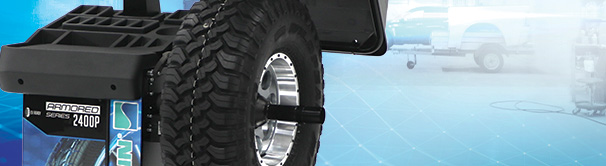
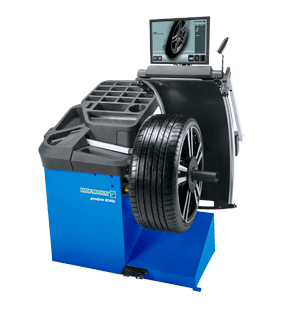
That pressure was on display at a recent industry tradeshow, where Zach Christman highlighted the Hofmann® Armored 2400P and its technician-focused design. What stood out wasn’t just the touchscreen or the modern interface. It was how the balancer guided the entire workflow, allowing technicians to watch the process unfold without stopping to think about the next step. This same design philosophy extends across Hofmann touchscreen wheel balancers equipped with comparable automated functions.
A balancer that guides your workflow
When the Balancer Carries the Process
Hofmann has spent decades refining wheel service equipment around how work unfolds at the balancer. The result is a process that allows technicians to move from wheel to wheel without second-guessing setup or measurements. There’s no guessing, no mental checklist—instead, a touchscreen interface designed for clarity and speed. The interface presents clear, visual instructions that guide each step. Setup is straightforward, and weight placement is definitive. The technician can confirm what the machine is asking for before moving on.
Errors usually start when technicians are asked to remember measurements and sequences during repetitive work. Automation removes the need to manually measure and input distance, diameter, and width. By capturing this information automatically, the balancer helps ensure consistent measurements from wheel to wheel and technician to technician.
During the balancing cycle, easyWeight™ laser guidance assists precise adhesive weight placement by indicating the exact location on the rim. Instead of estimating, technicians are guided directly to the correct position. There’s no respin, no weight peeled back off the rim. This contributes to improved first-pass balance accuracy while helping limit excess wheel weight usage.
For modern alloy wheels, automatic spoke detection and split-weight balancing further streamline the process. The balancer identifies spoke positions and guides hidden adhesive placement behind adjacent spokes, preserving the wheel’s appearance without compromising balance quality. What used to require stopping, backing up, and trying again is now a guided, repeatable operation.
Throughout the process, Power Clamp™ electromechanical clamping applies constant force for repeatable results. The wheel stays put. While consistent centering and secure mounting remain foundational to accurate balancing, automated clamping removes another variable from the equation. Combined with stop-in-position rotation and LED wheel lighting, weight application becomes faster and clearer, especially during long shifts or high-volume periods.
A balancer that has integrity
Where Small Delays Turn into Long Days
In a busy shop during peak tire season, these design choices translate directly into keeping work moving. A technician mounts the wheel and lowers the hood, and the balancer handles measurement, mode selection, and positioning. Laser guidance shows exactly where to place the weight, so the wheel stops in position, and the job moves forward without interruption. Multiply that efficiency across four wheels per vehicle and multiple vehicles per day, and the difference becomes hard to ignore. For onboarding, guided workflows and clear on-screen prompts shorten in-bay time, preventing small slowdowns that pull experienced techs away from higher-value work.
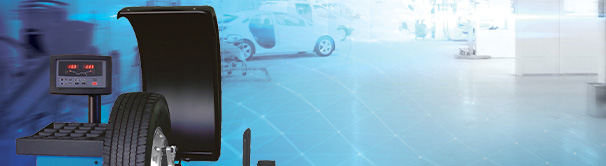
Small delays don’t always come from the balancing cycle itself. They often appear during the physical handling of heavy wheels. That’s where the geodyna® 980L comes in. Its integrated heavy-duty wheel lift removes that friction from the process. Built as a robust, reliable lifting system, it allows a single technician to raise and position large wheel assemblies quickly and with control, instead of stopping to reposition or calling for help. By bringing the wheel to a working height in a controlled, ergonomic motion, the lift helps reduce physical strain and fatigue that can slow a technician down over the course of a long shift. When handling heavy-duty wheels becomes a smooth, repeatable step instead of a disruption, work stays at pace and small delays are less likely to stack up.
Not all delays show up immediately. On vehicles with large-diameter or alloy wheels, guided split-weight placement helps avoid cosmetic issues and unnecessary rework. Without that guidance, technicians often rely on estimation, leading to multiple balance attempts and excess weight usage. Those inefficiencies tend to show up at the end of the week.
Finishing the Work Without Fighting the Machine
A wheel balancer shouldn’t slow the work down. The automation, guided workflows, and intelligent features are built into Hofmann balancers to keep accuracy high and work moving when volume spikes. These features aren’t about adding polish. They’re there to get rid of the small delays and inconsistencies that slow the bay down. Keeping technicians performing at their best starts with equipment that works with them, not against them. When a balancer automates the critical steps, technicians stay focused, fatigue drops, and rework disappears. That’s what keeps work flowing when pressure is on.
Tire Tread Depth: What You Need to Know
Alignment Made Smarter: Optimizing A-Arm Adjustments with Intelligent Guidance
Customer Trust and Precision You Can See: Using Alignment Technology to Build Confidence
Key Features to Look for in a Tire Changer for High-Volume Shops
How to Choose the Right Tire Balancing Machine for Your Shop
How Alignment Services Increase Customer Retention for Tire Shops
The ROI of 3D Wheel Alignment Systems
Hands-On Innovation: How EZ-Toe™ Simplifies Toe Adjustments
Wheel Alignment: A Complete Guide
How to Choose the Best Tire Machine for Your Shop
Symmetric vs Asymmetric Lift: The Key Differences Every Shop Should Know
How to Use a Tire Machine: A Step-by-Step Guide for Safe Operation
 Wheel Aligners
 Wheel Balancers
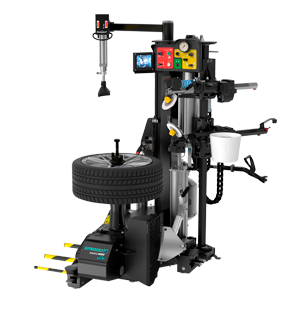 Tire Changers
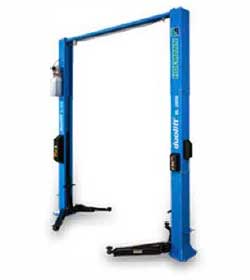 Lifts
Lifts


