


Why Proper Balancer Training Is Critical to Solving Post-Balance Vibration Complaints
Every shop owner has seen it happen: a vehicle returns after tire service with a vibration complaint, even though the wheels were already balanced. The balancer showed zero imbalance, and the weights were placed correctly. From a process standpoint, nothing appeared out of line.
Post-balance vibration comebacks are among the most common reasons customers return after tire service. Across industry trade publications and technician education resources, these issues are consistently linked to wheel mounting or balancing variables, not technician effort or attention. As wheel assemblies have become lighter, more complex, and more design-sensitive, even minor centering or interface inconsistencies can translate into noticeable vibration. The takeaway is not a decline in technician capability, but an increase in the precision required to achieve consistent, repeatable balance results on modern wheels.
For owners, the real cost isn’t the vibration itself. It’s the repeat visit, the added labor, and the erosion of customer confidence when a job that should have been complete comes back through the door.
Why a Wheel Can Balance Correctly and Still Vibrate
A wheel can measure as balanced on a machine yet behave differently once installed on the vehicle. This disconnect is well-documented and common in real-world service environments. If the wheel is not centered the same way on the balancer as it is on the vehicle, or if the wheel or tire is not perfectly round, the balance result may not fully translate to on-road behavior.
The most common contributors include improper centering during mounting, cone or collet mismatch, and differences between lug-centric and hub-centric mounting. In these cases, the balancer is doing exactly what it’s designed to do. The issue isn’t the machine’s measurement capability. It’s whether the mounting process accurately reflects how the wheel is supported on the vehicle.

Why Repeatability Is the Owner’s Concern
Hofmann® understands that, from a business perspective, the critical factor is repeatability. The result is only useful if it can be reproduced consistently.
When a wheel produces different balance results each time it’s mounted, the shop loses diagnostic clarity, so technicians are left rebalancing without knowing whether the vibration is truly a balance issue or whether the balance result itself is inconsistent. That uncertainty drives rework, and this is where unnecessary labor accumulates. Not because technicians are guessing, but because the process hasn’t fully eliminated mounting variables. Before any vibration complaint can be diagnosed efficiently, the balance result has to be trusted.
Eliminating the Balancer as a Variable
Hofmann wheel balancers are designed to support accurate, repeatable balance results through guided workflows, consistent clamping, and measurement processes that reduce variability across wheel types.
In heavy-duty applications, where larger and higher-mass wheel assemblies leave less margin for inconsistency, this design intent becomes even more critical for controlling repeat work caused by mounting variation rather than imbalance itself. Even with advanced equipment like the geodyna® 8200P, proper mounting and clamping remain essential.
No balancer can compensate for incorrect centering. Training ensures technicians use the machine as it was designed, so the equipment itself is never the source of uncertainty. For owners, this matters because consistent processes protect productivity. When the balancer is not a variable, diagnosis moves forward instead of looping back.
Modern wheel balancers are sophisticated machines. They’re designed to make accuracy easier, but their full benefit depends on correct application. Equipment-specific training aligns technician technique with machine design. It doesn’t replace skill. It reinforces consistency, which is what keeps rework from creeping into daily operations. Training teaches technicians more than how to use the machine. It teaches them when the result is reliable.

Where Hofmann Fits
Hofmann provides operator and application training focused specifically on its wheel balancers through Snap-on® Equipment training channels and Hofmann training centers. That training concentrates on proper use of Hofmann wheel balancers, correct mounting and clamping methods, and consistent, repeatable balancing procedures.
The objective is straightforward. Hofmann training helps ensure the balancer is not the source of the vibration complaint. Once balance accuracy is verified, technicians can move forward confidently instead of repeating the same step. This scope is intentional. Hofmann supports the foundational accuracy that makes further diagnosis efficient.
Knowing When Rebalancing Stops Adding Value
One of the most important outcomes of proper balancer training is knowing when rebalancing is no longer productive. Once mounting accuracy is verified and balance results are repeatable, continued rebalancing rarely changes the outcome. If the vibration originates beyond balance, knowing it’s time to move on prevents wasted labor and protects customer trust. For owners, this is where training pays for itself.
Consistent equipment training reduces unnecessary rework by removing uncertainty from the process. Technicians trust their balance results. Shops avoid repeated balance cycles that don’t
resolve the concern. The impact shows up where owners feel it most: improved bay efficiency, fewer repeat visits, and stronger customer confidence in completed work.
Training as a Diagnostic Foundation
Vibration complaints aren’t solved by equipment alone. They’re solved by trained technicians using equipment correctly and consistently. Hofmann wheel balancer training supports accurate, repeatable balance results technicians can trust. When that foundation is in place, diagnosis becomes faster, clearer, and more profitable.
And when technicians trust the balance result, that’s when real diagnosis can begin.
Built For Busy Bays: Why Ease of Use Matters More Than Ever
Tire Tread Depth: What You Need to Know
Alignment Made Smarter: Optimizing A-Arm Adjustments with Intelligent Guidance
Customer Trust and Precision You Can See: Using Alignment Technology to Build Confidence
Key Features to Look for in a Tire Changer for High-Volume Shops
How to Choose the Right Tire Balancing Machine for Your Shop
How Alignment Services Increase Customer Retention for Tire Shops
The ROI of 3D Wheel Alignment Systems
Hands-On Innovation: How EZ-Toe™ Simplifies Toe Adjustments
Wheel Alignment: A Complete Guide
How to Choose the Best Tire Machine for Your Shop
Symmetric vs Asymmetric Lift: The Key Differences Every Shop Should Know
How to Use a Tire Machine: A Step-by-Step Guide for Safe Operation
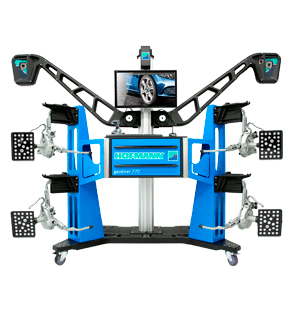 Wheel Aligners
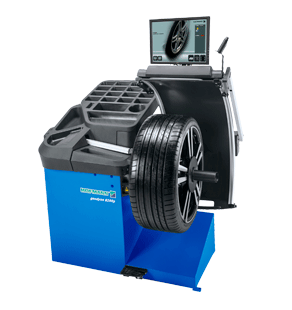 Wheel Balancers
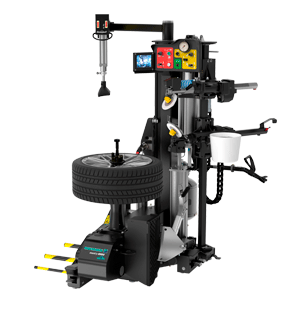 Tire Changers
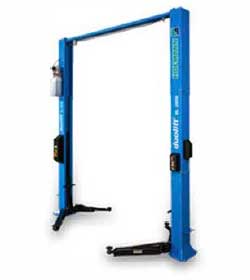 Lifts


